welcome
Here, you’ll find information, resources and a player community centered around the Murray mechanism flute.
about the murray flute
Since its first official iteration in 1960 to its “finale” model in 2004, the flute designed by Alexander Murray saw many changes, but one thing remained constant: A desire to make a flute that is better in tune and more natural to play, while being simple in design and mechanically reliable. In short, the flute that Theobald Boehm dreamed of making.
Even the early Murray flutes of the 1970s were better in tune and easier to play than the most commonly used Boehm flutes (with closed g# and Briccialdi thumb, although neither were Boehm’s preference).
Over 40+ years of development, there were variations in the acoustic scale, thumb keys design, trill key placements and venting, design of the F# touch, D# crescent (formerly roller) and D# touch, and foot joint length and design.
When we describe a “Murray flute” today, we include standard features of the Murray mechanism: Coltman C#, Boehm thumb (B natural to B flat, the reverse of Briccialdi), open G#, open D#, Murray trill keys, and crescent-shaped D# touch.
The first Murray flutes were made by Albert Cooper but the Cooper Scale wasn’t devised until 1974. Murray flutes made in the mid-1970s were made in the Cooper scale, which itself continued to evolve, or the Coltman scale. The Lasewski scale was adopted in the 1990s and continued through to the “Finale” model made in 2004.
Jack Moore made the most Murray flutes and collaborated with Alex Murray on the design of the mechanisms. Other craftsmen included Albert Cooper, Tom Green, David Wimberley, and Brannen.
key differences between "standard" and murray flutes
By “standard,” we mean the closed G#, Briccialdi thumb, closed D# flute mechanism most commonly played by students and performers alike.
Murray flutes differ in key ways that affect the sound as well as the means of producing it.
Players benefit from:
- lighter, more reliable mechanisms and better venting because all keys are sprung open.
- logical fingerings that move up and down the flute in a natural order based on the pitch ascending and descending (see Patterns).
- trill keys playable as regular notes, with new trills and tremolos made viable.
- no breaks in tone color throughout the range.
- quick, even response and tremendous carrying power.
- many alternate fingerings for facility, speed, pitch and dynamics.
- better weight distribution, key to balancing the flute between your hands without gripping it.
- a lightweight, elegant design that is simple and mechanically reliable.
- a tapered head joint and half-hole mechanism (automatic and optional) which combine to facilitate excellent octaves (Lasewski scale models).
features overview
The Murray-Moore mechanism has seen dozens of iterations over more than 40 years of development. Here is an overview of the key mechanisms Alex Murray sought to improve or added. For more in-depth historical reference, see History.
Open G#
This was the first modification Alex made to an existing flute, in 1948, after reading Boehm's treatise and finding his original design more rational mechanically and acoustically. Open G# makes the duplicate G# hole unnecessary; The spring of an open key is lighter than that for a closed key; top E is improved when correctly vented with only the A hole; and there is one finger and one key pad on G. It's also more logical because the fingers go down the body of the flute along with the pitch and the awkward contrary motion of G-G#-A is eliminated.
Open D#
After switching to Open G#, Alex addressed Open D#, circa 1960. Open D# enables the RH fingers to move more freely. All keys are thus sprung open for optimal venting. The Crescent is attached to the pinky D key on the foot, allowing D to be played with either RH ring finger or pinky. Murray flutes saw many variations in design, right up to the Finale 2004 model that has the D crescent placed atop the outer edge of the D# key and a slight elevation in the center of the D# key.
F# Touch
Open D# freed the pinky to take on other tasks. The F# touch is located between the D cup and D# touch. It offers optimum venting on F# and makes E-F# and F-F# trills easy and true. All holes below E remain open. Murray split the left hand A key so the Bb hole remains open when the A hole is closed and connected the A key to the F# touch to better vent high F#.
Coltman C#
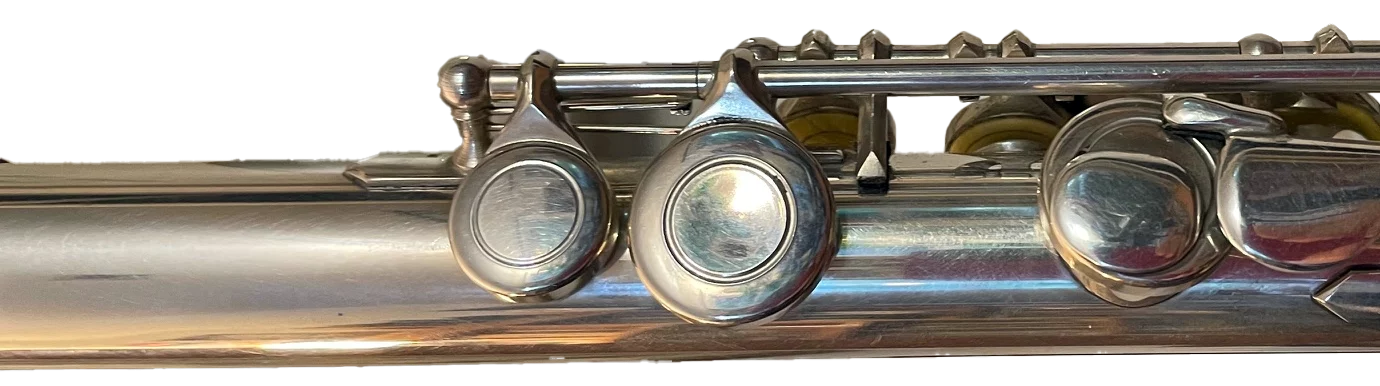
Coltman C# solves the problem of the problematic c#, often muffled in quality and out of tune. A simple mechanical linkage and the addition of a tone hole allows one hole to vent D5, Eb5, D6, G#6, A6 and Bb6 and the other to vent C#.
Thumb Keys
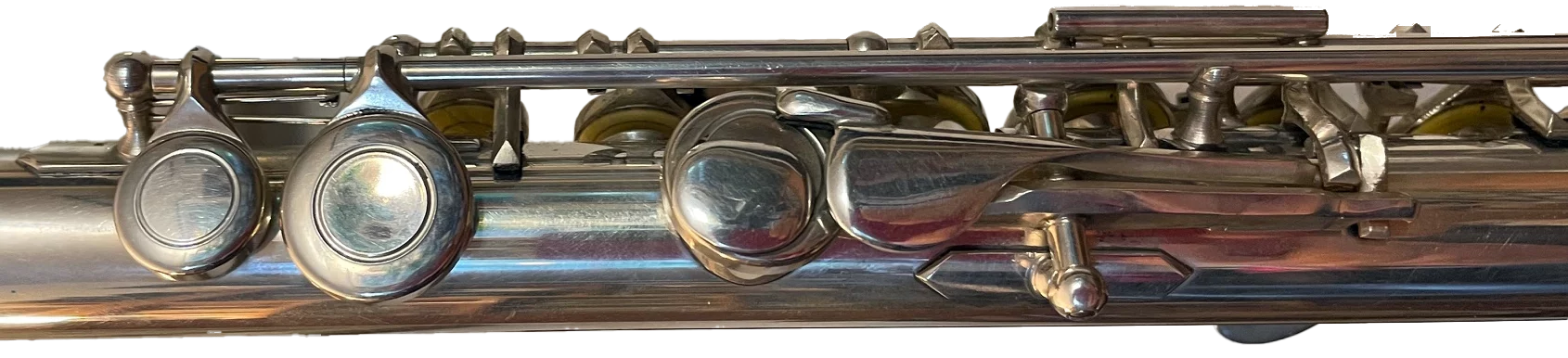
The reverse thumb, aka Boehm thumb, is the opposite of the Briccialdi thumb most U.S. flutists play. It's more logical and some argue it offers better overall balance in the left hand. Together with Open G#, the fingers of the left hand go down in chromatic order with the pitch.
Trill Keys
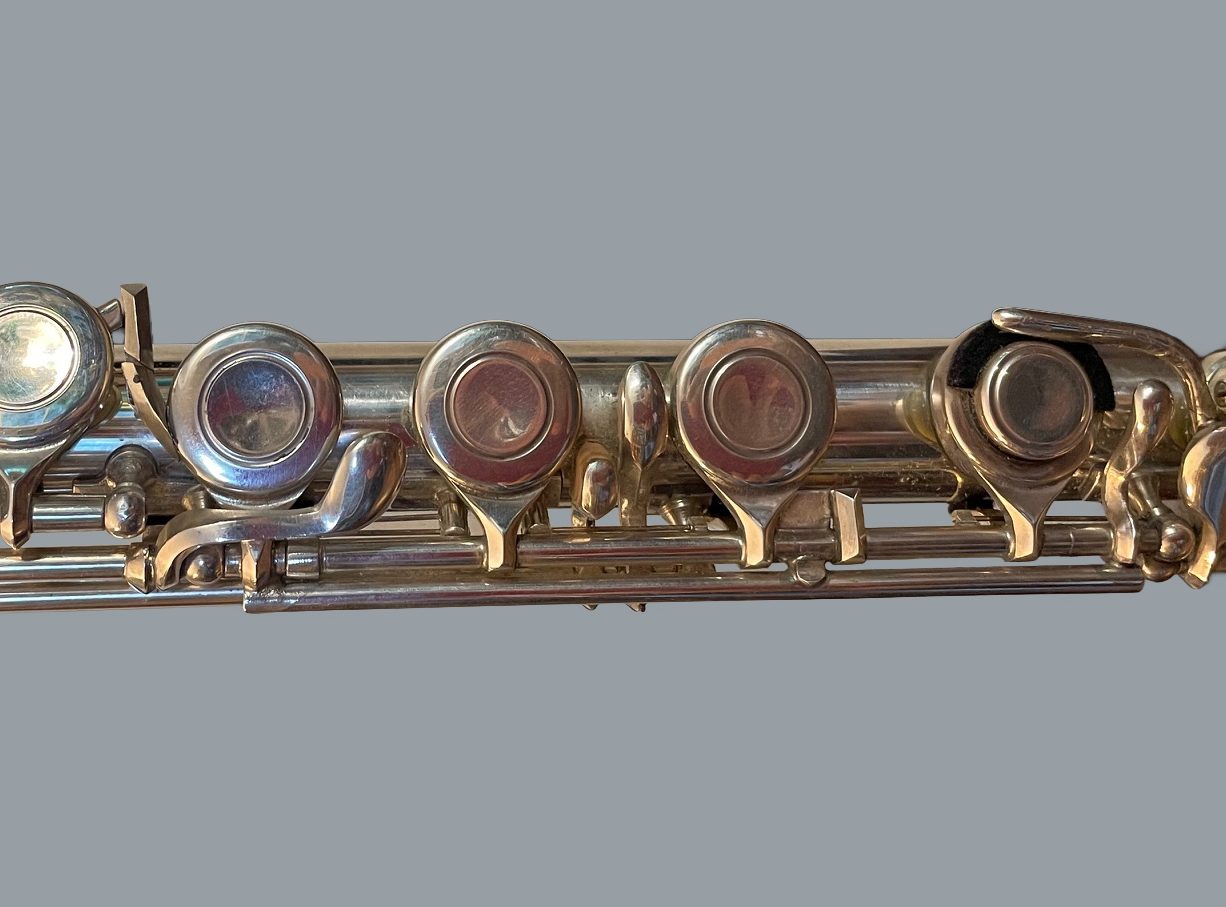
Trills are in tune and of good quality when played slowly, offering the possibility of portimento effects. The two trill touchpieces between F and E cups can be played individually or simultaneously. In the Lasewski scale models made after 1998, the third trill key for high B formerly located between E and D cups is omitted (high B is played with the second, larger trill key; the two trills can be played together for optimum venting of high B flat).
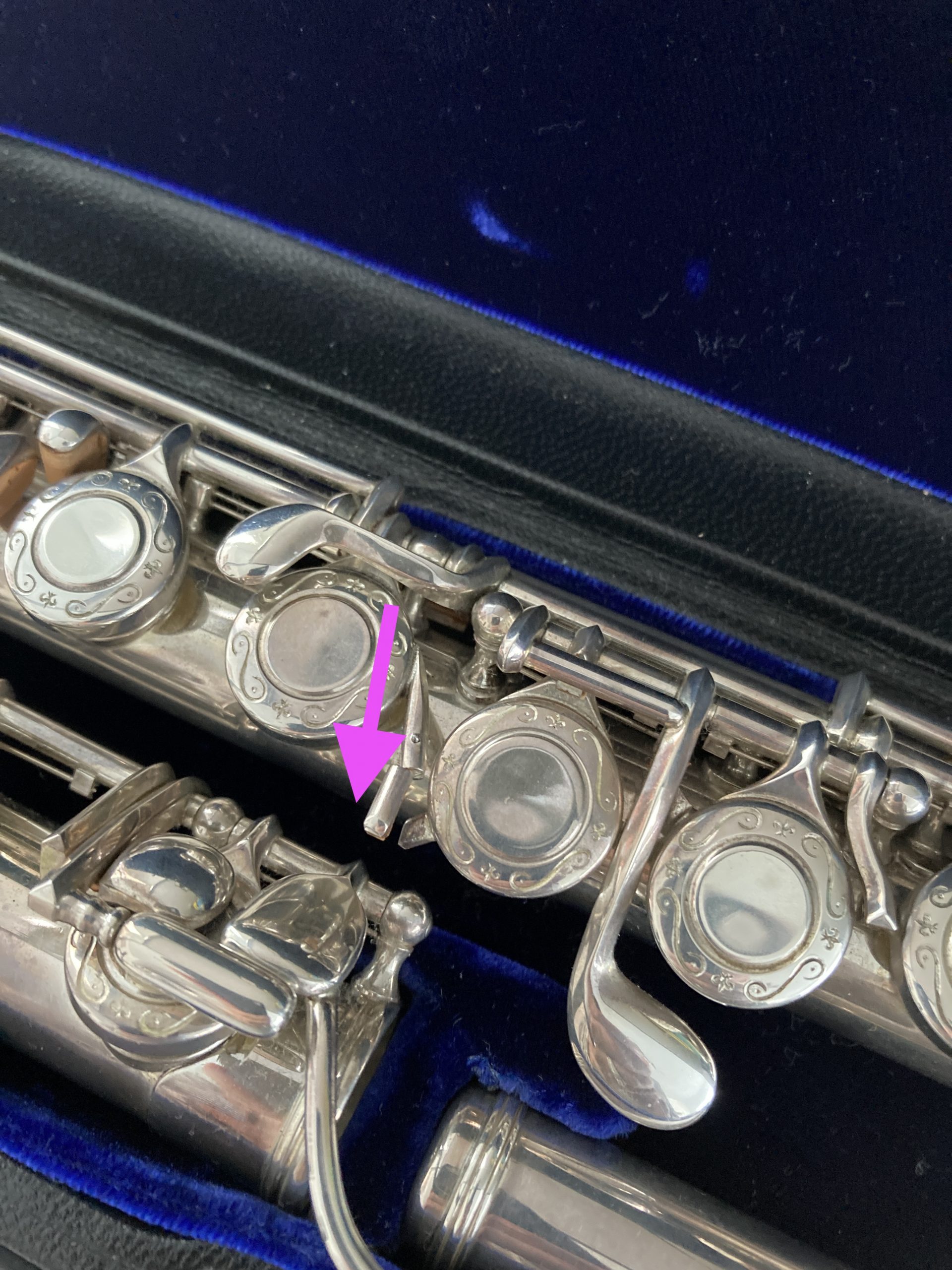
Half-Hole Mechanism
In Lasewski scale models made in the 1990s, the half-hole mechanism works in tandem with the narrowed baroque-style headjoint to bring high register octaves in tune. It can be switched off with a small lever.
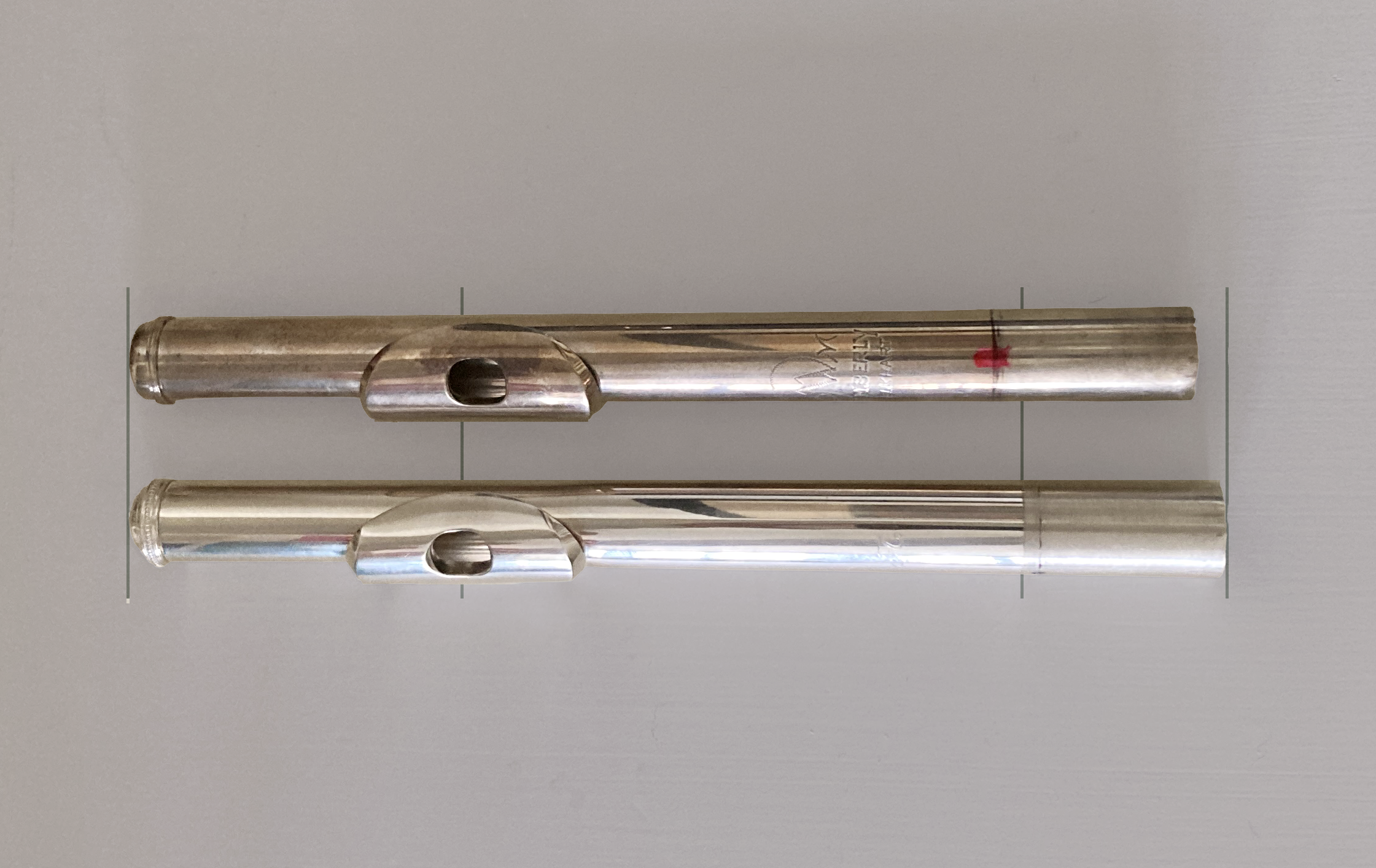
Headjoint
In Lasewski Scale models, the headjoint is narrowed more at the top, the distance from crown to embouchure is different and the tube is longer. These models cannot be played in tune with a standard flute headjoint. The Lasewski scale head takes less air and offers less resistance in the upper register.
murray community
Many flutists around the world play the Murray mechanism. We asked them about their flutes and their experience with switching. More profiles coming soon!